‘We have more deer than our forests can support’: Norwich walk highlights browse damage
Posted
By Valley News
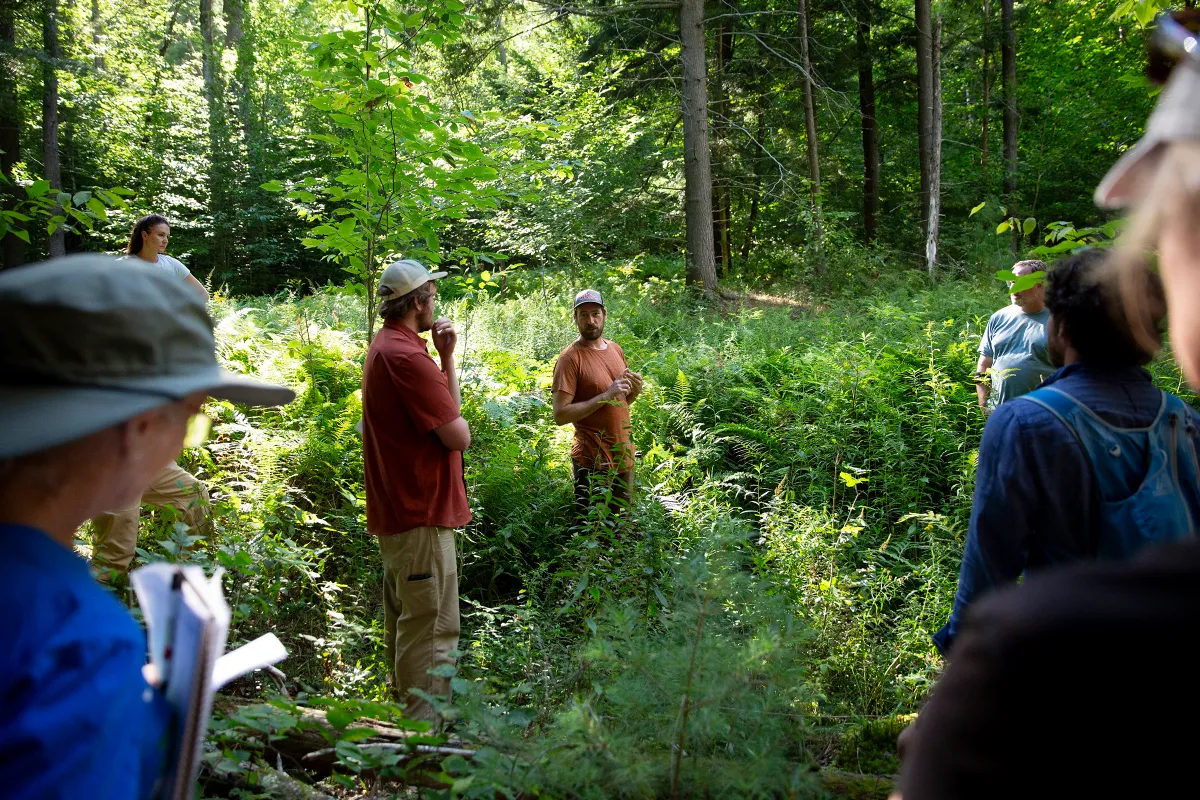
Dan Healey, center, a Vermont county forester based in the White River Junction office, at an event organized by the Upper Valley Land Trust at Brookmead Conservation Area in Norwich, Vt., on Monday, Aug. 31, 2026. Photo by Alex Driehaus/Valley News
This story by Alex Driehauswas first publishedin the Valley News on Sept. 14, 2026.
NORWICH — About 30 people walked through the woods at Brookmead Conservation Area recently clad in hiking gear and armed with printouts of a deer browse assessment index. Attendees scanned the forest understory looking for saplings with torn leaves and chewed stems and other telltale signs of deer browse.
The Aug. 31 event, organized by the Upper Valley Land Trust, brought together foresters and deer biologists from both sides of the Connecticut River to teach members of the public about the impact that overabundant deer can have on forest ecosystems.
Brookmead is a good example of that impact because “it has been hit extremely hard by deer,” said Holly Henderson, naturalist and outdoor programs leader with the Upper Valley Land Trust.
Deer eat a variety of food sources, from herbaceous plants and fresh leaves on saplings to beech nuts and acorns. They eat around 7 to 10 pounds of food per day, about what would fit in a 5-gallon bucket, according to Vermont wildlife biologist and deer project leader Nick Fortin. When deer density gets too high, heavy browsing can limit forest regeneration and allow for the proliferation of invasive species.
Warmer winters and increased suburbanization have contributed to an increase in the deer population over the past several decades, according to New Hampshire Fish and Game Department deer project leader Becky Fuda.
“We have more deer than our forests can support,” Fortin said.
New regulations in Vermont — like allowing hunters to fill antlerless tags with rifles during the regular season in November — will help address the problem, Fortin said, but won’t be enough to fix it. While regulation changes can make it easier for hunters to harvest deer, managing deer density would require more landowners to allow hunting on their properties.
“What we’re seeing today is an artifact,” Fortin said. “It took decades to get to this point.”
During the event, foresters discussed other management strategies to help promote forest regeneration. Attendees visited a sample deer exclosure, which helps support the growth of saplings and other native plants by protecting them from deer. Dan Healey, a Vermont county forester based in the White River Junction office, talked about the benefits of creating large clearings with no canopy, which allows saplings to grow because deer are less comfortable in areas with no cover.
Henderson said she hopes that attendees left with a better understanding of the impact of deer browse and the many approaches that can be implemented to support the northern hardwood forests around the Upper Valley.