How to manage exam anxiety: Evidence-based coping strategies for students
Posted
Elizabeth Keohan, LCSW-C, MSW for Talkspace
How to manage exam anxiety: Evidence-based coping strategies for students
You studied and prepared, but when the test appears in front of you, everything suddenly goes blank. That moment of emptiness, the racing heart, and rising panic is exam anxiety, and it goes beyond simple pre-test nerves.
For many students, it gets in the way of showing what they actually know. According to a meta-analysis published in 2024 in Frontiers in Psychology, exam anxiety refers to the emotional, physiological, and behavioral reactions tied to the possibility of negative evaluation in an upcoming test or exam.
Not all anxieties are the same. Anxiety can be a normal stress reaction, and mild levels of anxiety can actually help sharpen focus before a challenge. As Talkspace explains below, the true challenge arises when those reactions grow intense enough to interfere with schoolwork and daily life.
Key Takeaways
Exam anxiety involves emotional, physiological, and behavioral reactions tied to the possibility of negative evaluation and can affect learning during preparation, not just performance on test day.
Recognizing the physical, emotional, and cognitive signs of exam anxiety early can help students and the people who support them respond before stress becomes overwhelming.
Evidence-informed strategies, such as spaced practice, sleep, deep breathing, and progressive muscle relaxation, may help students manage academic pressure and mental health challenges more effectively.
Common Signs of Exam Anxiety
Exam anxiety doesn't look the same for everyone, but knowing what to watch for is the first step toward managing it. The warning signs of test anxiety tend to show up across three areas:
Physical symptoms
Bodies often react to test-related stress before the mind fully registers what's happening. Common physical signs of exam anxiety include:
Rapid heartbeat
Sweating
Muscle tension
Restlessness or feeling physically on edge
Urges to leave the situation
Emotional symptoms
According to a study published in Medical Education Online in 2025, the emotional layer of exam anxiety can feel just as disruptive as any physical symptom. Common emotional symptoms include:
Excessive worry about outcomes
Dread in the days or hours before a test
Feelings of helplessness or panic
Irrational fears
Cognitive symptoms
Test anxiety often involves worry and task-irrelevant thoughts, especially the persistent fear of not being able to recall what you studied. When these mental barriers take over during an exam, they typically manifest as:
Racing thoughts that disrupt focus
Difficulty concentrating on questions
Mental blanks mid-exam
Negative self-talk that damages confidence
Together, these signs paint a fuller picture of how exam anxiety can show up and why it's worth taking seriously. Anxiety becomes a concern when it feels out of control and gets in the way of everyday things like school or work. Recognizing which of the above signs feels familiar is a meaningful first step toward finding the right kind of support.
Understanding How Academic Pressure Triggers Anxiety
Academic environments don’t just measure what students know; they repeatedly signal that performance carries real consequences. Pressure can accumulate in ways that shift anxiety from a passing feeling into a persistent pattern.
Common anxiety triggers, such as fear of failure, peer comparison, and expectations from family or academic institutions, can heighten a student’s exam-related stress. When those pressures layer on top of one another, the cognitive demands of preparing for high-stakes exams can become genuinely overwhelming.
Motivation vs. burnout: When pressure becomes harmful
There's a meaningful difference between a challenge that energizes and pressure that depletes. Understanding how academic pressure affects students’ motivation matters because the relationship isn't straightforward.
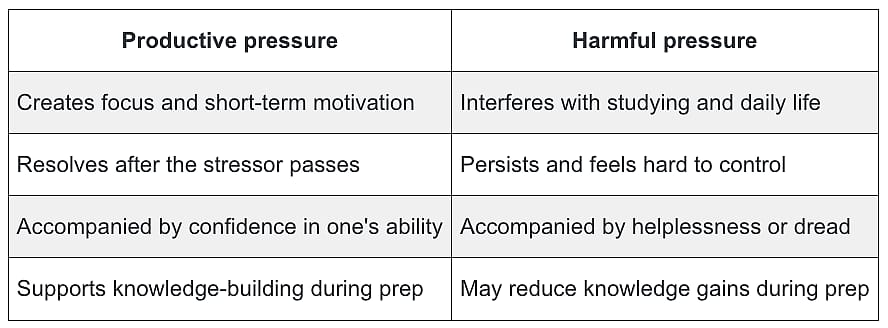
According to a 2022 study published in the journal Psychological Science, 309 medical students preparing for a high-stakes exam found that higher trait test anxiety was associated with smaller gains in knowledge during the preparation phase. The study suggests that anxiety may not only affect performance in the exam room; it can get in the way of learning well before test day arrives.
Below is a chart that outlines how pressure can affect people in both productive and harmful ways.
Talkspace
When pressure tips into the harmful column, it can affect how academic pressure affects students’ motivation in lasting ways — making early, proactive support more useful than waiting until exam day. But, with the right approach, students can build habits that keep pressure from tipping into overwhelm.
Smarter Study Strategies to Prevent Last-Minute Stress
Preparation that builds real knowledge tends to reduce the uncertainty that feeds test anxiety. The goal is not to study harder, but to study in ways that help you remember better.
Build a realistic study timeline
Breaking material into smaller chunks spread across available time is more effective than cramming everything in at once. Spaced practice consistently outperforms last-minute studying when it comes to actual learning outcomes. Working backward from the exam date to build a realistic schedule is one practical way to put this into action.
Active recall and spaced practice
Repeatedly testing yourself on material, rather than passively re-reading notes, is one of the most effective ways to improve retention. Methods like self-quizzing, practice problems, and flashcards build real understanding, and that kind of preparation is what helps manage academic pressure with confidence.
Lifestyle basics: Sleep, nutrition, and movement
Getting eight hours of sleep each night is essential for students of all ages. Good sleep sharpens focus and helps the brain retain information, both of which are key to studying effectively.
What you eat can also have a real impact on your anxiety levels. A diet rich in fruits and vegetables, along with regular meals and nutrients like omega-3 fatty acids, probiotics, zinc, magnesium, and selenium, may help keep anxiety at bay. Exercise and movement can help reduce exam anxiety. Activities like aerobic workouts, yoga, and breathing exercises have all shown some benefit in managing stress.
These lifestyle fundamentals work together, not as a checklist to complete perfectly, but as a foundation that makes everything else more manageable. Long-term habits lay the groundwork, but sometimes anxiety shows up mid-exam regardless of how well you've prepared.
In-The-Moment Techniques To Stay Calm During Exams
Even well-prepared students can feel anxiety spike mid-test. Having a small set of familiar calming strategies can make a real difference.
The 1-2-3 calming method
Several forms of relaxation training, such as deep breathing exercises, progressive muscle relaxation, and autogenics, can help individuals reduce stress, enhance relaxation states, and improve overall well-being.
Deep belly breathing: It involves diaphragmatic breathing as a simple relaxation method — breathing from the belly rather than the chest, letting the breath slow and deepen.
Progressive muscle relaxation: It includes progressive relaxation as a technique of tensing and then releasing muscle groups in sequence, starting with one area and moving through the body.
Positive self-talk: It can help promote positive psychological states and regulate cognition.
Emergency desk toolkit
A few simple items can support in-the-moment calming during an exam. They're practical, low-effort options worth keeping on hand.
For instance:
Water to stay hydrated
Earplugs to reduce sensory distraction
A cue card with a breathing reminder
A stress ball for physical tension release
Mints or essential oils to help ground your senses
The answer to how to overcome exam anxiety in the moment often comes down to having a plan that's already practiced. Familiarity with these techniques before test day is what makes them useful when anxiety shows up uninvited. For most students, a combination of preparation, lifestyle habits, and in-the-moment strategies is enough to manage exam anxiety effectively.
But sometimes, the support needed goes beyond what you can do on your own. When anxiety feels overwhelming or consistently gets in the way of everyday life, connecting with a licensed therapist is a reasonable next step
Frequently Asked Questions (FAQs)
How does academic pressure affect students’ motivation over time?
Academic pressure can initially boost motivation by pushing students to achieve goals, but over time, excessive pressure often leads to stress, burnout, and decreased engagement. Prolonged high pressure can make students feel overwhelmed, reducing their intrinsic motivation and willingness to learn.
What is the difference between normal stress and exam anxiety?
Normal stress is temporary and can actually push you to prepare better. Exam anxiety is more intense, and it interferes with your focus, sleep, or performance even when you're well-prepared.
How can students cope with exam anxiety without cramming?
Students can manage anxiety by sticking to a study schedule, taking regular breaks, and practicing deep breathing or mindfulness. Getting enough sleep and staying active also helps keep stress levels in check.
Can academic pressure and mental health issues be connected?
Yes. Ongoing academic pressure can contribute to anxiety, depression, and burnout in students. When stress becomes constant and unmanaged, it can seriously affect emotional well-being.
When should students seek help for exam anxiety?
Students should seek help when anxiety feels out of control or starts affecting their sleep, eating, or daily life. Talking to a school counselor or mental health professional is a good first step.